“`html
How to Participate in Public Consultations in Toronto
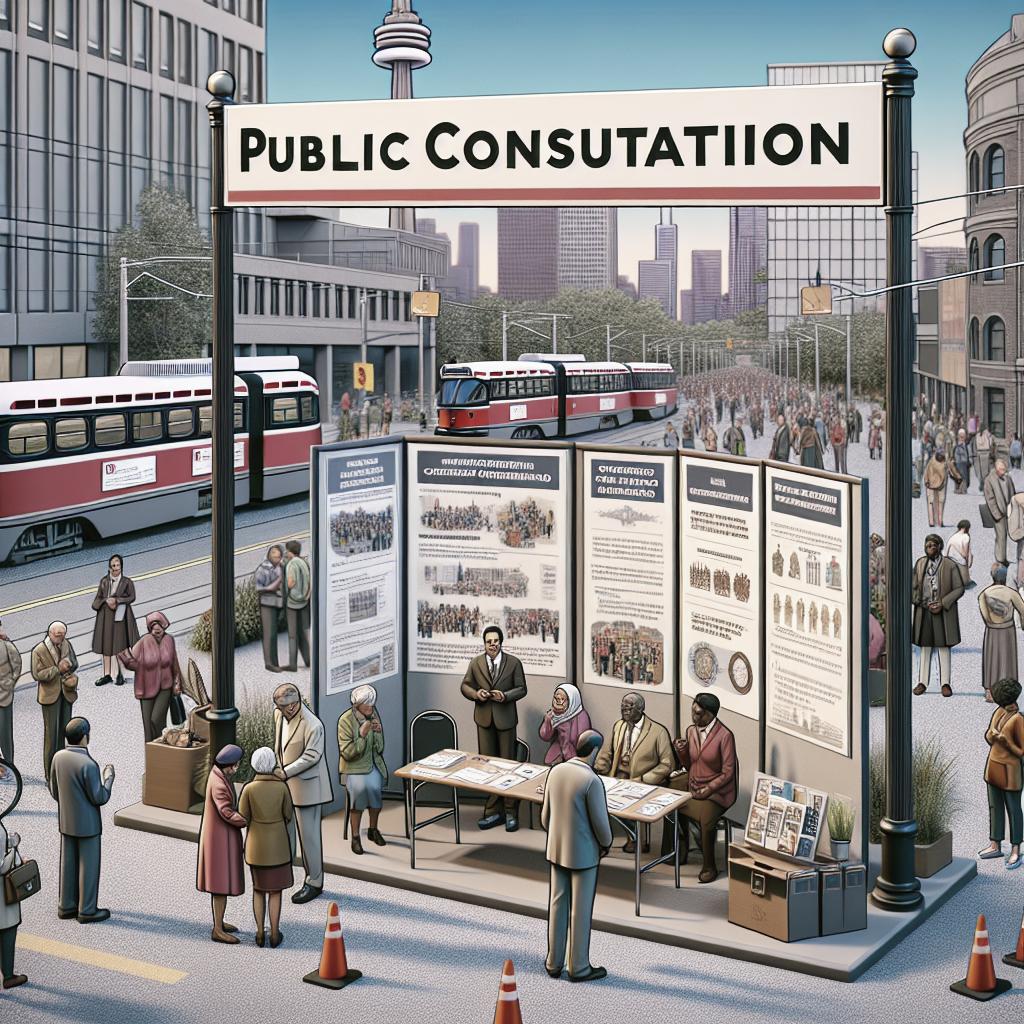
Public consultations in Toronto provide residents and stakeholders a vital opportunity to voice their opinions, contribute to policymaking, and influence the projects that shape the city. This blog post explores various ways in which Toronto residents can engage in public consultations. From surveys and improving accessibility standards to participating in strategic planning reviews, numerous platforms enable everyone to contribute meaningfully. Whether you’re interested in budgeting, transportation development, or educational initiatives, participating in these exercises is crucial for fostering a collaborative community and ensuring public interests are at the forefront of decision-making.
Overview
Toronto is a dynamic city known for its diversity, which is reflected in its wide range of public consultations. These consultations are mechanisms through which the municipality seeks input directly from the public on significant issues affecting the community. They cover a broad spectrum of topics, enabling the authorities to gather diverse opinions and insights, ensuring policies and programs reflect the community’s needs and interests.
Public consultations can range from town hall meetings and online surveys to focus groups and interactive workshops. By participating, citizens have the power to influence decisions about budget allocations, urban development, accessibility standards, educational reforms, and many other crucial areas. The city ensures the consultation processes are accessible, transparent, and informative, fostering an environment where public engagement is valued and encouraged.
How to get involved
Getting involved in public consultations in Toronto is straightforward. First and foremost, staying informed is crucial. The city often promotes upcoming consultations through various channels, including social media, local newspapers, and official government websites. Residents can sign up for newsletters or alerts to receive updates about relevant public consultations.
Participating in these consultations involves attending meetings, filling out surveys, or joining virtual discussions. Each format has its unique requirements; for example, some consultations may require pre-registration or entail specific criteria to qualify for participation. However, regardless of the format, the key is to be proactive and engaged. Sharing expertise, personal experiences, and suggestions can significantly contribute to the consultation’s success, ensuring that a wide array of perspectives is considered in the decision-making process.
Find a public consultation
Survey: 2025 Budget consultations
The 2025 Budget consultations are a critical opportunity for Toronto residents to have their say on how the city allocates its resources. These consultations aim to gather public feedback on spending priorities and fiscal policies. Participating in these surveys ensures that the budget reflects the community’s needs and aspirations, addressing priorities such as healthcare, education, infrastructure, and public safety.
Participants can access the budget consultation surveys online and are encouraged to provide detailed feedback on various budgetary categories. The data collected from these surveys are meticulously analyzed, forming an integral part of the budgeting process. Public contribution here is vital to crafting a balanced, equitable budget that addresses both immediate and long-term community needs.
Consultation: Improving accessible customer service standards
Improving accessible customer service standards is a consultation aimed at ensuring Toronto’s services cater effectively to all residents, including those with disabilities. This consultation invites participants to share experiences and insights regarding existing customer service practices and suggest improvements to enhance accessibility and inclusivity.
The feedback collected is crucial in shaping policies that promote equitable access to municipal services. By participating in this consultation, residents help identify gaps and propose solutions that will ultimately lead to higher-quality service delivery for everyone, reinforcing Toronto’s commitment to being a leader in accessibility.
Survey: Equipping students with practical life skills
The survey focusing on equipping students with practical life skills seeks to redefine educational outcomes by incorporating essential life skills into the curriculum. This initiative recognizes the growing need for students to gain competencies that extend beyond traditional academic subjects, preparing them for real-world challenges.
Participants in this survey are encouraged to weigh in on which life skills are critical for today’s students. The collective input from educators, parents, and students is invaluable in reshaping education systems to foster holistic development and ensure that students are well-prepared for future endeavors.
Survey: Review of Ontario’s 2020–2025 Anti-Human Trafficking Strategy
Ontario’s 2020-2025 Anti-Human Trafficking Strategy review survey enables participants to assess the effectiveness of strategies implemented to combat human trafficking. The consultation aims to evaluate current methodologies and propose enhancements that strengthen intervention and prevention measures.
Public engagement in this survey provides a platform for survivors, advocates, and community members to contribute insights that are critical in refining and advancing anti-trafficking initiatives. Their feedback becomes a guiding force in developing strategies that are compassionate, effective, and comprehensive.
Improving accessible built environment standards
The consultation on improving accessible built environment standards seeks public input on enhancing the physical accessibility of Toronto’s buildings and public spaces. This initiative focuses on creating environments that are not only legally compliant but also genuinely usable for all residents, irrespective of their physical abilities.
Through this consultation, participants can contribute perspectives on design, accessibility aids, and regulatory measures. This collective feedback informs policies and practices that prioritize inclusivity in urban planning and construction, ensuring that Toronto remains an accessible city for all.
Survey: 2024 Review of the Canada-wide Early Learning and Child Care (CWELCC) system
The 2024 review of the CWELCC system survey gathers insights on the effectiveness and quality of early learning and childcare services across Canada. Participants of this consultation include parents, educators, and other stakeholders who share valuable perspectives on the system’s strengths and areas needing improvement.
By participating, individuals contribute to enhancing early education frameworks, which foster child development and support parents. The feedback drives improvements in education accessibility, affordability, and quality, shaping a robust childcare system that benefits future generations.
Survey: Southwestern Ontario Transportation Planning Study
The Southwestern Ontario Transportation Planning Study survey is an initiative designed to collect public opinions on the region’s transportation infrastructure needs. Feedback from this consultation informs future planning decisions, addressing needs for road improvements, public transit expansion, and sustainable transportation options.
Residents are encouraged to share their experiences and suggestions, helping outline a transportation strategy that accommodates growth and enhances accessibility. This participative approach ensures that infrastructure developments align with the region’s environmental goals and economic priorities.
Survey: Help advance Ontario’s modular housing sector
The survey aimed at advancing Ontario’s modular housing sector seeks public opinion on leveraging modular construction to address housing affordability and supply challenges. This consultation targets insights on innovative housing solutions that can deliver quality living spaces efficiently and sustainably.
Participants are invited to share feedback on potential hurdles and advantages associated with modular housing. The insights collected guide policymakers in crafting strategies that promote the adoption of modular homes, ultimately contributing to more diverse, affordable housing options across Ontario.
Survey: 2024 Budget consultations
Similar to the 2025 budget consultations, the 2024 budget consultation survey provides a channel for Toronto residents to contribute their views on municipal spending for the coming fiscal year. Engaging with this survey allows citizens to influence fiscal priorities by highlighting crucial areas needing focus and investment.
By sharing their insights, participants play a key role in ensuring that the city’s budget allocations reflect the community’s collective vision. This annual exercise in civic involvement underscores the importance of transparent and community-driven budget planning in municipal governance.
Previous consultations
Reviewing previous consultations offers insights into Toronto’s ongoing commitment to inclusive governance. Past consultations, such as public transportation network expansions and cultural facility upgrades, have demonstrated the city’s responsiveness to public feedback and its iterative approach to policymaking.
Learning from past consultations helps improve current and future engagement processes. Analyzing previous outcomes allows the city to refine consultation methods, ensuring continuous enhancements in communication channels, data collection, and implementation of public suggestions in municipal strategies.
Summary of Main Points
| Key Topic | Details |
|---|---|
| Public Consultations Overview | Defines the role and significance of public consultations in Toronto. |
| How to Get Involved | Explains steps to participate and the importance of engagement. |
| 2025 Budget Consultations | Discusses the importance of public input in fiscal planning. |
| Accessible Customer Service Standards | Highlights the aim to improve accessibility in municipal services. |
| Equipping Students Survey | Focuses on integrating life skills in education. |
| Anti-Human Trafficking Strategy Review | Assesses the effectiveness of anti-trafficking measures. |
| Accessible Built Environment Standards | Collects input on improving building accessibility. |
| CWELCC System Review | Gathers feedback on early childhood education. |
| SW Ontario Transportation Study | Seeks input on regional transportation needs. |
| Modular Housing Sector Survey | Encourages feedback on modular housing benefits and challenges. |
| 2024 Budget Consultations | Another chance for public input on financial priorities. |
| Previous Consultations | Reflects on the impact of past public engagement. |
“`