“`html
Ways to Explore Toronto’s Historic Architecture
Toronto, a bustling metropolis in Canada, is not only known for its modern skyline but also for its rich tapestry of historic architecture. For those eager to uncover the layers of history interwoven with Toronto’s urban development, a journey through some of its architectural landmarks is a must. From the opulent Fairmont Royal York Hotel to the intriguing remnants of the First Parliament Site, each location tells a unique part of Toronto’s story. This guide will explore both well-known structures and hidden gems, offering a comprehensive look into the city’s architectural heritage. Whether you’re a history buff, architecture enthusiast, or just a curious traveler, these sites will provide a fascinating glimpse into Toronto’s past and the stories behind its iconic buildings.
Fairmont Royal York Hotel
Situated in the heart of downtown Toronto, the Fairmont Royal York Hotel is a beacon of opulence and history. Originally opened in 1929, this hotel was the tallest building in the British Empire at the time. Its Beaux-Arts style embodies the elegance and grandeur of the early 20th century, attracting visitors from all over the world. Stepping into its majestic lobby, adorned with grand chandeliers and Roman columns, is like taking a step back in time.
The Fairmont Royal York has been the residence of choice for numerous celebrities and royalty over the decades. It’s more than just a hotel; it’s a living museum of Toronto’s accommodation and hospitality history. Beyond its interior, the hotel’s role in Toronto’s social scene is an intriguing narrative, hosting countless events and galas. Whether you’re staying overnight or simply stopping by for a tour, the Fairmont Royal York Hotel offers an unforgettable experience that captures the essence of Toronto’s architectural and cultural legacy.
First Parliament Site
The First Parliament Site represents a foundational chapter in Toronto’s history. Located at the intersection of Parliament Street and Front Street, it marks the original location of Upper Canada’s first parliament buildings, which were constructed in the late 18th century. These buildings played a crucial role in the governance and political development of what is now Ontario, though they were destroyed during the War of 1812.
Today, the site is undergoing efforts to commemorate its historical significance through archaeological digs and research. Visitors can learn about the site’s past and its impact on shaping Canadian history through various informational displays and occasional guided tours. Exploring the First Parliament Site gives insight into early Canadian politics and the resilience of the city in rebuilding its governmental foundation after the destruction.
Hockey Hall of Fame
While primarily a celebration of one of Canada’s favorite sports, the Hockey Hall of Fame is also housed in a building rich with history. Originally opened in 1885 as a Bank of Montreal building, this landmark is a fine example of Beaux-Arts architecture, characterized by its intricate stonework and grandeur.
The Hockey Hall of Fame offers more than just a collection of artifacts and exhibits; it is an architectural marvel in its own right. With its vaulted ceilings, stained-glass windows, and ornate detailing, the building itself is a testament to Toronto’s architectural heritage. For sports fanatics and history enthusiasts alike, the Hall of Fame combines a passion for hockey with an appreciation for Toronto’s architectural evolution.
St. Lawrence Hall
As one of Toronto’s oldest public buildings, St. Lawrence Hall exudes historical charm and architectural splendor. Built in 1850, this Renaissance Revival structure served as a hub for social events, town meetings, and theatrical performances. Its prominent location on King Street East makes it a significant part of Toronto’s heritage landscape.
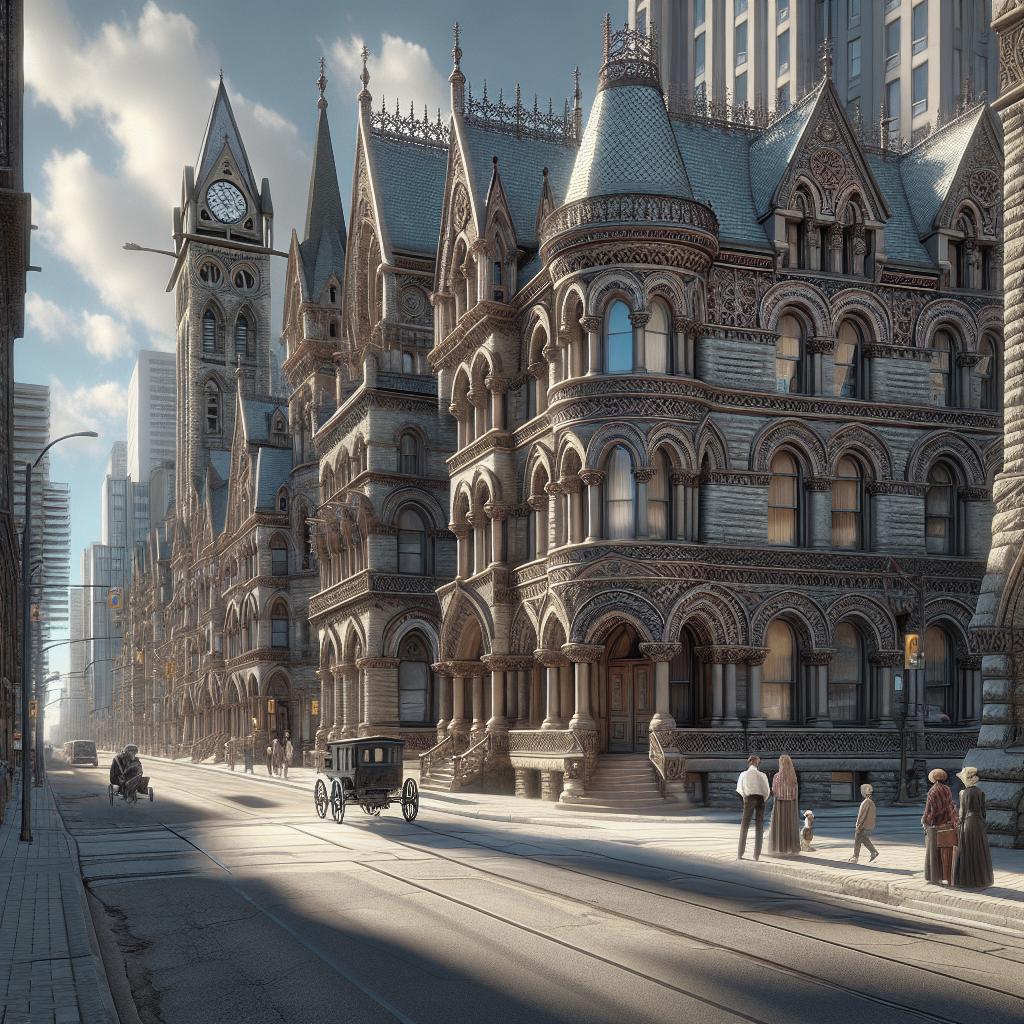
The exterior of St. Lawrence Hall, with its stately columns and elegant clock tower, reflects the design sensibilities of mid-19th century Toronto. Inside, the facility has been meticulously maintained to preserve its historic character while adapting to modern uses. It continues to function as an event venue, bridging its rich past with contemporary community engagement. Visiting St. Lawrence Hall provides a captivating journey through one of Toronto’s enduring architectural masterpieces.
St. Lawrence Market
Adjacent to St. Lawrence Hall is the renowned St. Lawrence Market, a bustling marketplace that has served Torontonians for over 200 years. The market building itself is an architectural icon, combining historical elements with modern conveniences. It stands as a testament to Toronto’s commercial evolution and its multicultural mosaic.
Inside, the market is a hive of activity, featuring an array of vendors offering everything from local produce to artisanal goods. The building’s architecture reflects the city’s historical commitment to community and commerce. Exploring the St. Lawrence Market is not only a culinary delight but also a chance to appreciate a landmark that echoes the architectural and cultural diversity of Toronto’s past and present.
The Cathedral Church of St. James
The Cathedral Church of St. James is a stunning example of Gothic Revival architecture in Toronto. Located on Church Street, it was completed in 1853 and is one of the city’s most breathtaking religious structures. Its towering spire makes it one of the tallest churches in Canada, providing an impressive silhouette against the city skyline.
Within, the cathedral boasts beautiful stained glass windows, intricate woodwork, and an overwhelming sense of tranquility. The church has played an enduring role in Toronto’s religious and community life, serving as the Anglican Diocese’s mother church. Visiting the Cathedral Church of St. James offers a serene and contemplative experience, highlighting the spiritual and architectural heritage that has been preserved through the decades.
Toronto Sculpture Garden
A lesser-known gem within Toronto’s historical and cultural landscape is the Toronto Sculpture Garden. Situated on King Street East, this small park juxtaposes contemporary art with the historical architecture surrounding it. Since its inception in 1981, the garden has been a space where artists can create site-specific works that engage with the urban environment.
The ever-changing installations provide a dynamic contrast to the historical buildings that frame the garden. This integration of art and architecture invites visitors to reflect on the interaction between Toronto’s past and its creative present. A visit to the Toronto Sculpture Garden offers a thought-provoking experience that connects heritage with modern artistic expression.
Toronto’s First Post Office
For those interested in Toronto’s communication history, a visit to Toronto’s First Post Office is a rewarding excursion. This National Historic Site is located in the original town of York and dates back to 1833. It stands as an enduring symbol of Toronto’s early days when mail was a vital connection for the burgeoning community.
The post office offers an interactive museum experience where guests can learn about postal history and early Toronto society. Its architecture reflects the modest style of public buildings from that era, providing insights into 19th-century design and urban development. Exploring Toronto’s First Post Office provides a fascinating journey into the city’s communication past and architectural origins.
Summary of Main Points
| Landmark | Purpose | Architectural Style |
|---|---|---|
| Fairmont Royal York Hotel | Hotel/Museum | Beaux-Arts |
| First Parliament Site | Historical Site | Remains and commemorations |
| Hockey Hall of Fame | Museum | Beaux-Arts |
| St. Lawrence Hall | Event Venue | Renaissance Revival |
| St. Lawrence Market | Market Place | Commercial Architectural Fusion |
| The Cathedral Church of St. James | Religious Building | Gothic Revival |
| Toronto Sculpture Garden | Art Garden | Contemporary with Historical Context |
| Toronto’s First Post Office | Museum/Post Office | 19th Century Public Building |
“`